Kent · Auburn · Renton · Federal Way · Puyallup
Structural Drying & Dehumidification in Kent, WA
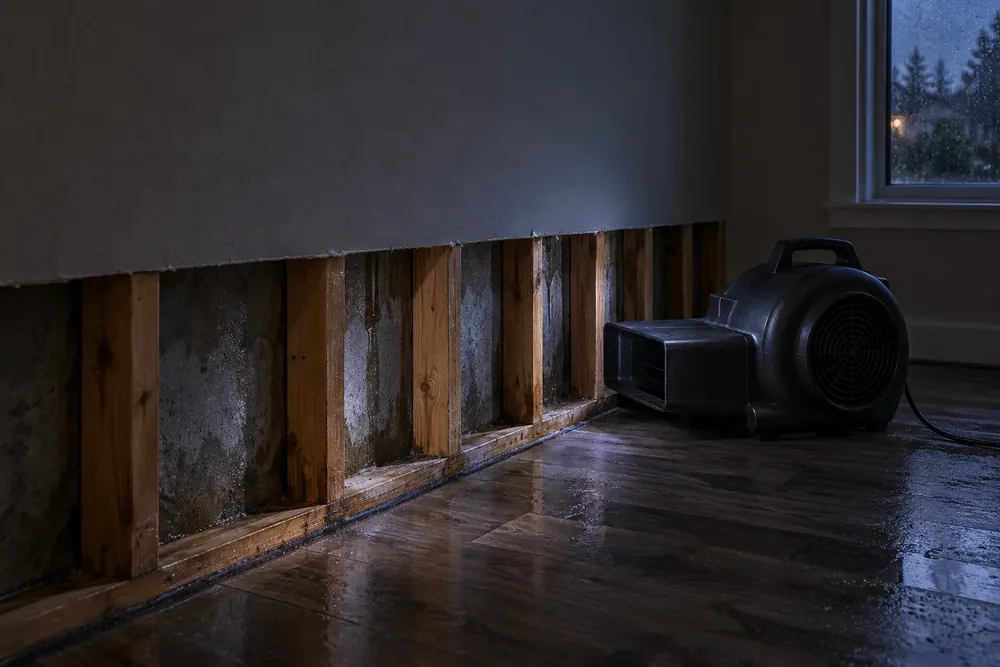
Our local water damage professionals dry wet framing, walls and subfloors in Kent with controlled airflow and dehumidification. Call and describe the leak, the affected rooms and any drying already underway; your technician checks moisture below the surface and explains the drying plan.
- Calls answered 24/7
- Water removal and drying
- Serving Kent and nearby
Dry the materials beneath the surface
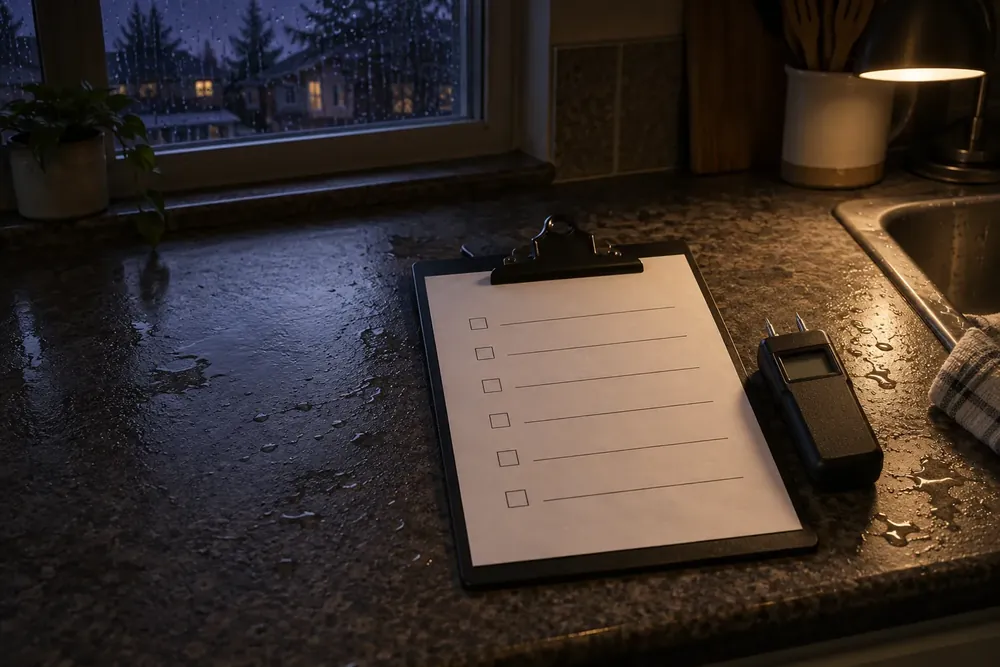
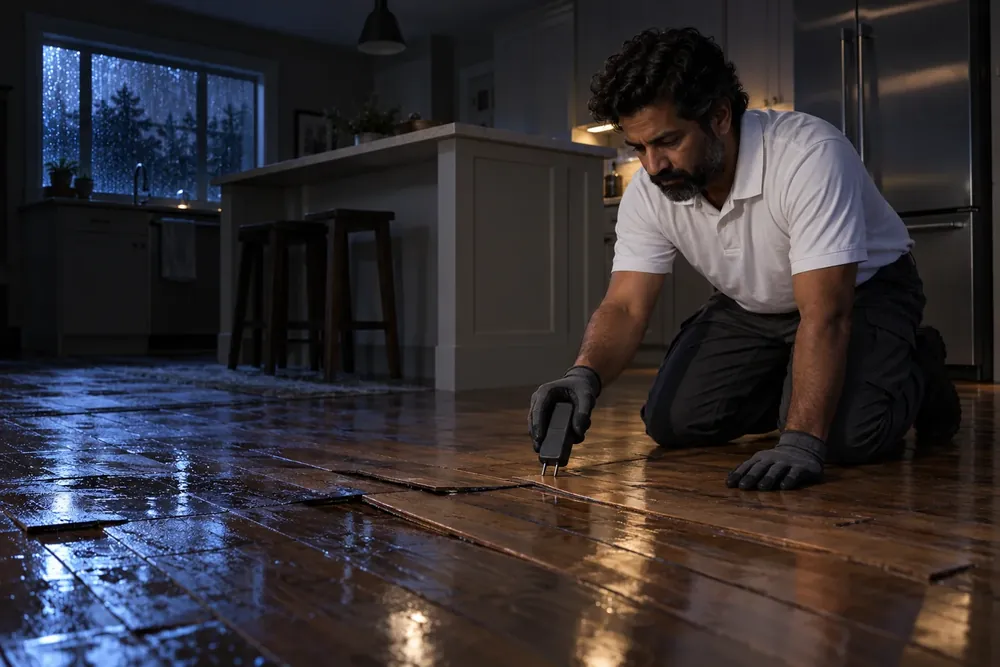
- Find trapped moisture. Your technician checks framing, wall cavities and subfloors with moisture meters, then records the wet areas for the drying plan.
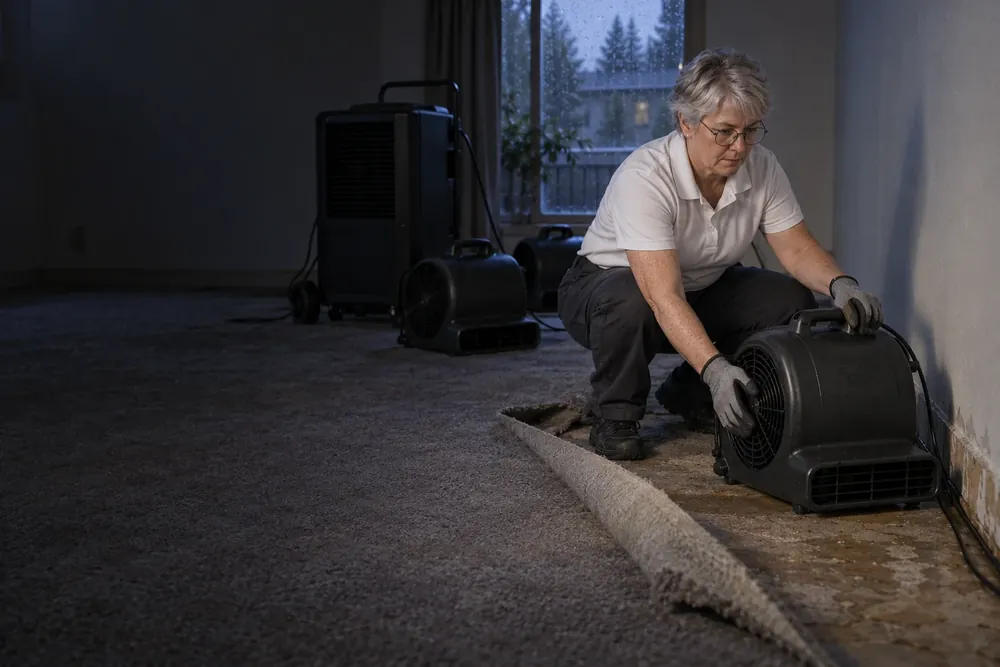
- Control airflow and heat. Air movers carry moisture away from exposed surfaces while dehumidifiers remove it from the air; controlled heat supports evaporation where appropriate.
- Allow time for deeper drying. Moisture held inside thick materials moves out gradually, so structural drying usually takes days rather than a few hours.
- Measure indoor humidity. For drying in the Seattle area, humid incoming air can slow drying, so your technician measures room humidity and controls airflow and dehumidification.
- Check the finish point. Follow-up readings show whether materials have reached the drying targets; a wall that feels dry still needs a moisture check before repairs close it up.
Call about moisture that stays behind
- Call when walls remain damp after standing water is gone.
- Paint blisters or baseboards swell along the leak's path.
- A room stays humid despite a household fan running.
- Subflooring feels soft, or moisture appears beneath the room where the leak started.
- An enclosed cavity smells damp after the visible surface dries.
Call, measure, dry and check again
- Call and give the Kent street address. Describe which rooms got wet, when you noticed the leak and whether water is still entering.
- Your technician measures the affected materials and identifies access needed for drying. The assessment separates surface wetness from moisture held inside walls or flooring.
- Drying equipment is positioned for the affected rooms. Airflow, humidity and temperature are adjusted as moisture leaves the materials.
- Your technician repeats readings and records the results. Drying ends when the assessed materials meet their targets, and any remaining repair needs are explained.
What changes the drying price in Kent
The wet area, material depth, access and equipment run time affect structural drying costs in Kent. Your technician sets moisture targets using comparable, unaffected materials as a dry standard and accounting for normal building conditions. Repeated readings show when the assessed materials reach those targets.
One of our local restoration professionals explains the proposed drying work and its price before work begins. The scope identifies included moisture checks, equipment visits and repairs. The restoration cost page explains how those parts of the scope affect the total.
Get a drying plan explained clearly
- Calls answered 24/7. Describe the damp room when you notice it, including water that has already been extracted.
- Building materials assessed. The assessment checks moisture in affected building materials at your Kent home.
- Scope before work. Hear what needs drying, how progress is checked and what the proposed work costs.
- Recorded conditions. Photos, moisture readings and a written scope provide documentation for insurance and a record of the drying work.
Keep clear of wet electrical areas
Stay out of standing water near outlets, cords or electrical equipment, and call from a dry place. Shut off the leaking water supply only if the valve is safely reachable.
The CDC's flooded-home guidance says to switch off main power only from a dry location. If reaching the breaker means stepping into water, leave that task to an electrician. Don't plug a household fan into a wet area.
Leave drying equipment settings to your technician. EPA drying guidance advises against sealing wet cavities or painting surfaces until the materials are dry inside.
Sources
Related water removal services
Areas we cover around Kent
For structural drying in Kent or a surrounding town, call and name the affected rooms. Moisture readings guide the drying work.
Questions callers ask about structural drying
What is water damage mitigation?
Water damage mitigation limits further damage through water removal, drying and other measures suited to the affected materials. Structural drying addresses moisture left inside the building after extraction. Call about the rooms that got wet, even when the puddles are gone; your technician identifies what still needs attention.
Does a water damage dehumidifier replace fans?
A dehumidifier removes moisture from the air; air movers help it evaporate from wet surfaces. Airflow and dehumidification need to stay balanced as materials dry. Your technician adjusts the setup using room humidity and material moisture readings.
How long does structural drying take in Kent?
Structural drying commonly takes several days, with more time needed when water has soaked deeply into materials or access is limited. Moisture readings inside a wall show how drying is progressing. Repeated readings guide equipment changes and show when the assessed materials have reached their drying targets.
What happens if I stop drying equipment early?
Stopping equipment early slows moisture removal and can leave framing or subfloors wet beneath a dry surface. Keep equipment running as directed. Your technician uses material readings against the drying targets to decide when equipment can come out.
How do I arrange water damage mitigation?
Call with your Kent address and describe where the water reached. Share the source if you know it, but you don't need to open a wall or measure the room first. Your technician assesses moisture, explains the work and uses follow-up readings to guide drying before affected areas are closed up.
Call about damp walls, framing or subfloors in Kent, and describe what still feels wet after the water is gone.
Call now(253) 330-8040