
Call about the water now; the safety steps below don't have to be finished first. Say which room is affected, whether water is still entering and what you see from a dry location. If your house is flooded, what to do next depends first on having a safe place to stand or leave from.
Flooded house: what to do first
Keep people out of standing water and away from wet electrical equipment. Water near outlets, cords, appliances or the electrical panel creates a shock hazard. Don't enter water to unplug something or reach a breaker. Leave electrical isolation and assessment to qualified help when safe access is uncertain.
Keep children and pets outside the affected area. If there is immediate danger, leave and call emergency services. Continue the water removal call from safety; you don't need to walk through each room to describe the problem.
What to do if water pipe bursts are suspected
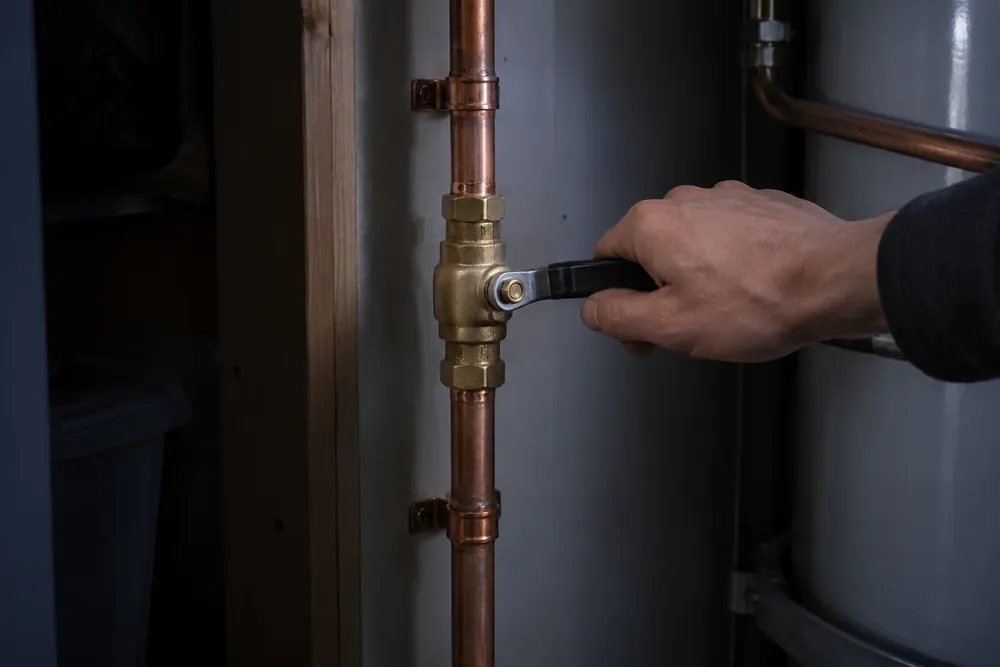
Close the main water shut-off only if you know its location and have a dry, safe route to it. If a familiar fixture valve safely isolates the leak, use that valve. Don't force a stuck handle or enter a flooded crawl space looking for a shut-off.
For burst pipe water damage, tell the person answering whether the flow stopped after you closed the valve. Pipe repair and water cleanup are separate tasks. Your technician checks the wet materials, while plumbing work addresses the broken line. You may call while someone else safely shuts off the water.
What to do about ceiling water damage
Stay clear of a ceiling that is dripping, bulging or sagging. Don't puncture the drywall to drain it. Water above a ceiling may involve hidden wiring or weakened material, so keep the space below clear and describe the damage from a doorway or another safe position.
Tell the person on the line which floor is above the stain and whether a bathroom, appliance or roof area is nearby. You don't need to prove the source before calling about ceiling water damage.
Move small valuables and record what you see
Carry small valuables to a dry spot only when you can reach them safely. Leave heavy furniture, wet appliances and anything sitting in questionable water alone. Don't drag soaked items across unaffected rooms.
Take photos from safe positions while the call is underway. Record the visible water, stained surfaces and affected belongings. Say when you first noticed the leak, rather than guessing how long hidden materials have been wet.
A short checklist helps you share the details during the call:
- Give the street address and affected floor.
- Describe the water source or say that it is unknown.
- Report active flow, ceiling sagging or nearby electrical equipment.
- Explain which rooms are safely accessible.
- Mention photos already taken; more pictures are not a condition of calling.
Leave sewage and wet air systems alone
For sewage or unidentified floodwater, and for any water near electrical equipment, stay out of the water, don't run household equipment in it, and leave the cleanup method to the technician who assesses the situation on the call. Keep the area separate and describe the suspected contamination during the call. Turning on a fan across questionable water may spread contamination instead of solving the problem.
A clean, working HVAC system may help with drying, but don't rely on it alone. Leave a flood-affected or contaminated system off for professional assessment. Your technician plans extraction and controlled drying around the water source and affected materials.
Keep the paperwork with the damage record
Photos, moisture readings and a written scope provide documentation of the damage and planned work. Keep the damage records together.
For burst water pipe repair cost, ask for the plumbing scope separately from removal and drying charges. See the restoration cost guide for the items to look for in the cleanup estimate. The call starts with what you see, without waiting for paperwork.