
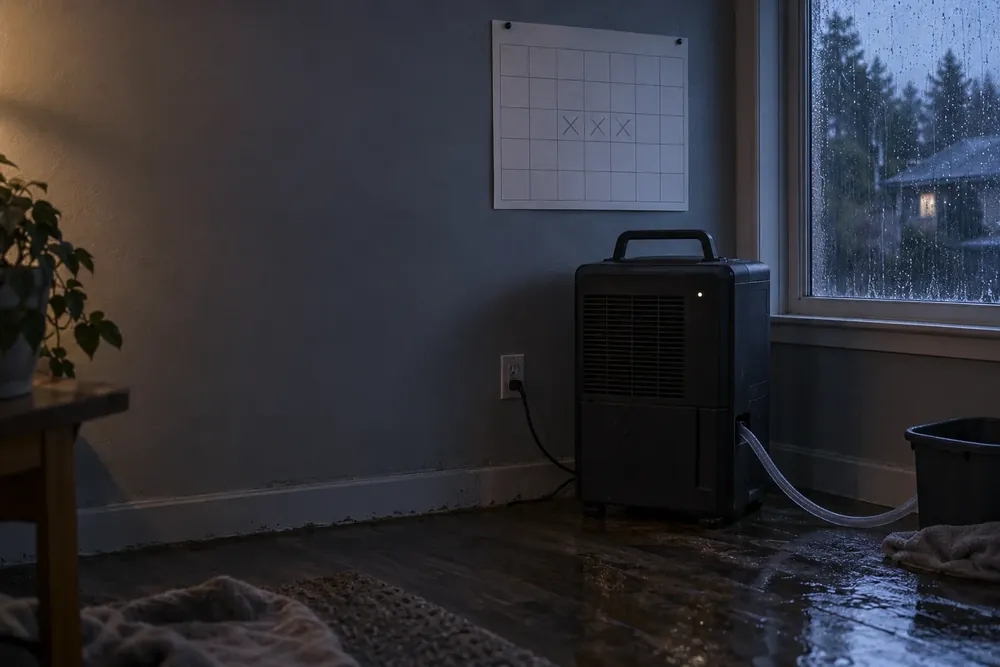
Call while the room is still wet and describe the water source, affected floor and time you noticed the damage. Drying time depends on the materials and moisture found during inspection. A room that feels dry to your hand may still hold water beneath flooring or inside a wall.
How long does water damage restoration take?
Restoration takes the time needed for assessment, water removal, cleanup, drying and any repairs the damaged materials require. Drying is one stage of that work. The EPA describes drying a flood-soaked home as taking several days to weeks; that broad window is not a finish date for your room.
Your technician explains the starting plan after checking the affected areas. Moisture readings then show whether the plan is working. Ask which materials are being monitored and what needs to happen before the next stage begins.
Remove water and find the wet layers
The first stage removes standing water and identifies the materials that remain wet. Extraction takes away liquid water, while structural drying addresses moisture still held in the building. Soaked padding, insulation or other materials may need removal before nearby surfaces are accessible for drying.
Tell your technician about rooms below the leak and places where water appeared later. Those details help direct the inspection. You don't need to lift carpet or open a wall yourself to provide them.
Watch progress during equipment use
Drying equipment stays in use while moisture readings show that the affected materials still need drying. Air movers support evaporation, and dehumidifiers remove moisture from the air. Equipment placement and operating conditions may change as different materials dry at different rates.
Ask your technician how to use the room while equipment is running. Leave equipment settings, placement and power arrangements as directed. If a unit stops or a new leak appears, call and report the change so the drying plan can be reviewed.
Understand what slows moisture removal
Humidity, material thickness and concealed water all affect drying progress. A surface exposed to moving air may dry sooner than the layers beneath it. Water trapped under flooring needs attention even when the top surface looks normal.
Outdoor air also matters. Opening windows does not always help when the incoming air is humid. Follow the drying plan for doors, windows and room use rather than changing ventilation just because the room feels warm.
Use these questions during a progress update:
- Which materials are still above their drying goals?
- Are readings falling at the monitored locations?
- Is moisture trapped below flooring or behind finishes?
- Does the equipment arrangement need adjustment?
- What measurements will support the decision to stop drying?
Finish drying with measurements
Drying is complete when the monitored materials meet suitable drying goals, rather than when the calendar reaches a chosen day. Your technician records readings and compares them with an appropriate reference for the material, such as unaffected areas. Air humidity alone doesn't show that a wall or subfloor is dry.
Ask for the final readings and the locations tested. Keep that record with the photos and written scope. Don't paint, seal a wet cavity or install replacement finishes while the underlying material still needs drying.
How long does water damage repair take?
Repair time depends on the removal and rebuilding needed after the affected materials are ready for finishing. Replacing drywall, trim or flooring has a separate sequence from removing moisture. Ask your technician which tasks are included in the drying scope and which repairs follow it.
A delay in repairs doesn't necessarily mean drying equipment needs to keep running. Ask for the measured reason behind equipment days and for the repair steps to be described separately. The cost guide explains how to read those items in a written scope.
How long does it take for mold to grow?
Mold growth has no single fixed clock for every wet room, and leaving materials wet too long increases the risk. Don't wait for visible growth before reporting damp surfaces or a new leak. Describe the moisture during the call so the affected materials get assessed.
For structural drying, give the street address and explain where the water traveled. Your technician will take moisture readings and walk you through the drying plan.