
Kent · Auburn · Renton · Federal Way · Puyallup
Basement Water Removal in Kent, WA
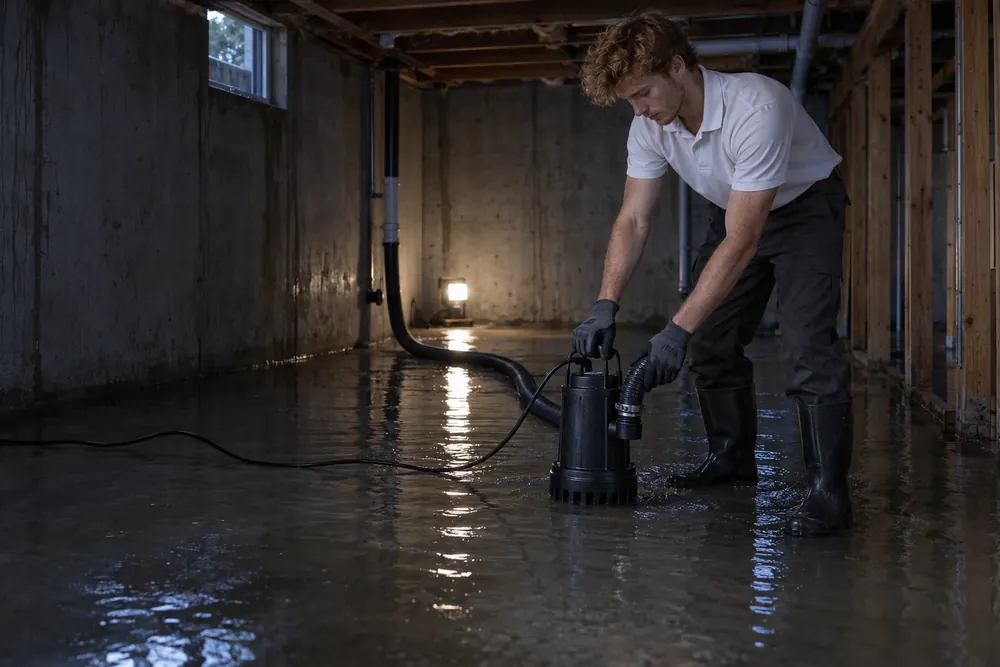
Our local water damage professionals remove standing water and dry wet basements and crawl spaces in Kent, WA. Call and tell the person who answers whether water is pooling downstairs, coming through the foundation or collecting beneath the floor.
- Calls answered 24/7
- Water removal and drying
- Serving Kent and nearby
Remove water and check beneath the floor
- Basement and crawl space checks. Your technician checks access, standing water and wet materials in older Kent homes. The inspection follows the home's layout, including hidden corners below finished rooms.
- Groundwater and sump trouble. Water around foundation joints or a sump that isn't clearing gets checked. Extraction addresses collected water; recurring entry needs a separate drainage or pump repair plan.
- Drain tile observations. Your technician records visible drainage problems and water returning after removal. Drain tile repair is discussed separately from extracting water and drying the space.
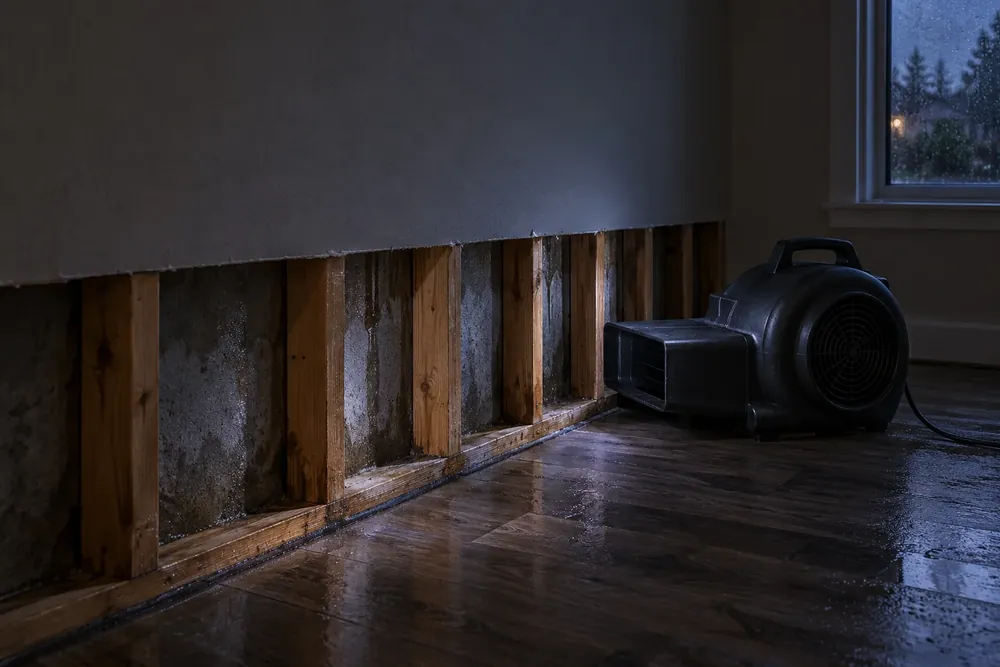
- Hidden crawl space moisture. Water beneath the home is easy to miss because the area is outside daily view. Wet insulation and floor framing need attention even when upstairs surfaces look dry.
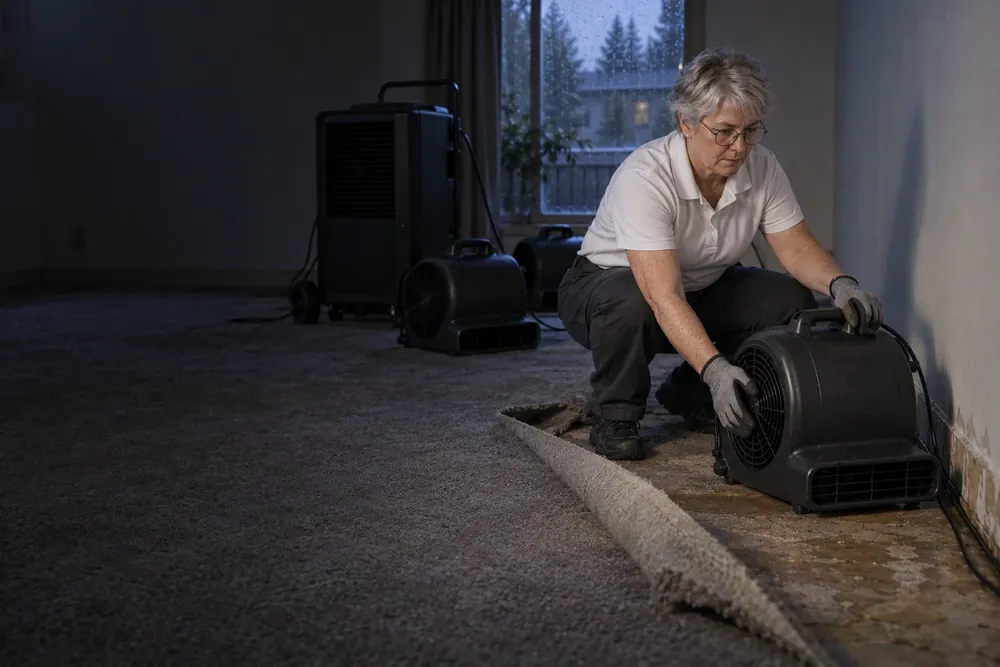
- Drying under floors. Moisture readings guide drying equipment placement and follow-up checks. For water removal, basement access and the affected materials shape the work.
Call when water collects below living rooms
- Call about a puddle spreading across the basement floor or water returning along a wall after you wipe it away.
- A sump pit overflowing or a pump running without clearing water needs attention.
- Damp insulation visible from the crawl space opening points to moisture beneath the floor.
- A musty smell downstairs or a soft floor above the crawl space deserves a moisture check.
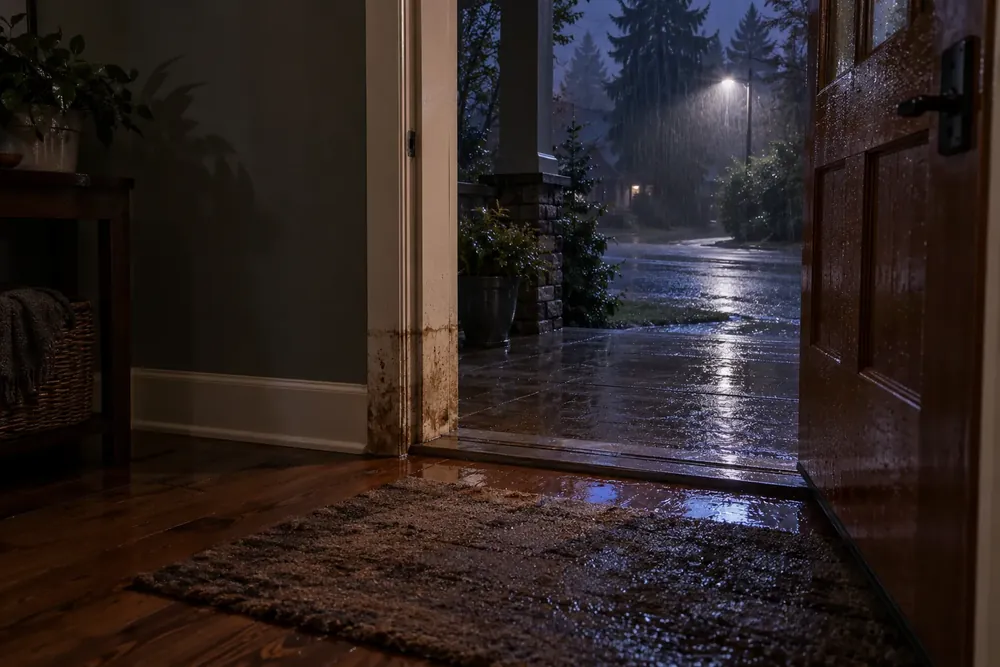
- Water touching outlets, cords or electrical equipment means stay out of the wet area and call from a dry place.
Call and describe the downstairs water
- Call with your Kent street address and describe where water is collecting. Say whether the sump is running and whether the space is finished, unfinished or beneath the house.
- Your technician inspects accessible wet areas and takes moisture readings. The inspection separates collected water from the source that still needs repair.
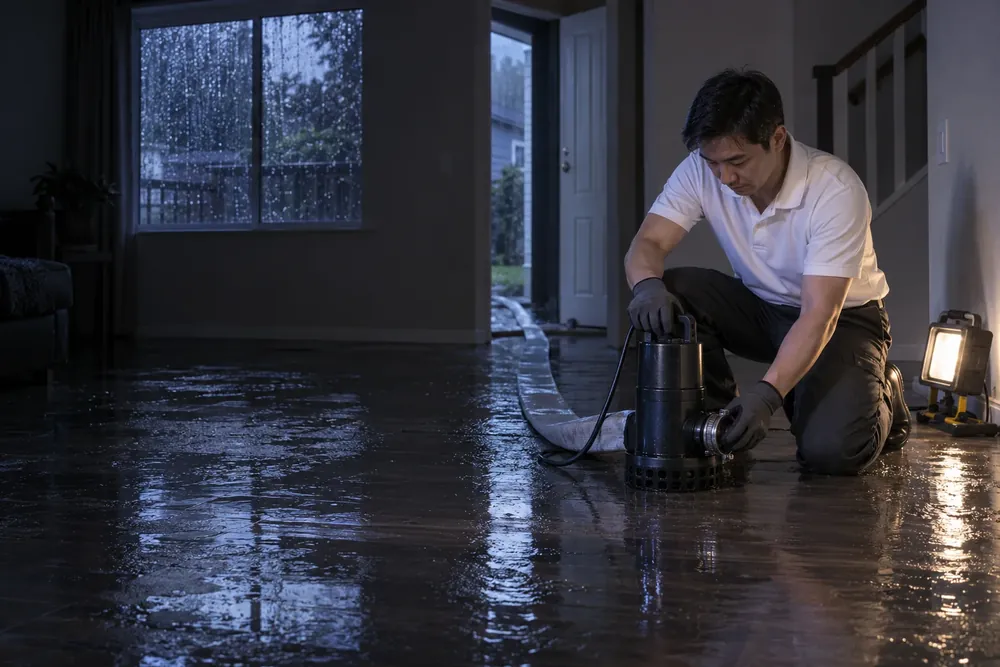
- Standing water is extracted, affected materials are assessed and drying equipment is placed. Access through stairs or a crawl space opening shapes the setup.
- Follow-up readings track drying beneath the floor and along foundation walls. Your technician explains remaining moisture, materials needing replacement and the next steps before finishes go back.
Access and wet materials affect the price
Basement flood cleanup cost depends on water depth, contamination, access and how far moisture has reached. An unfinished concrete floor differs from a finished room with wet carpet, insulation and drywall. A low crawl space adds access work, and continuing seepage complicates drying.
Your technician explains the proposed scope and price before starting the job. Pump or drainage repairs should be identified separately. After water damage, basement repair cost also depends on what must be replaced once drying ends. Read water damage restoration cost factors for the items that shape a written scope.
Get the downstairs problem explained clearly
- Calls answered 24/7. Describe the water when you notice it, including overnight seepage or a sump that has stopped clearing.
- Local work below the floor. Your technician checks the basement or crawl space and explains where moisture has traveled.
- A clear scope. Hear which materials need extraction, drying or replacement, with the price explained before work begins.
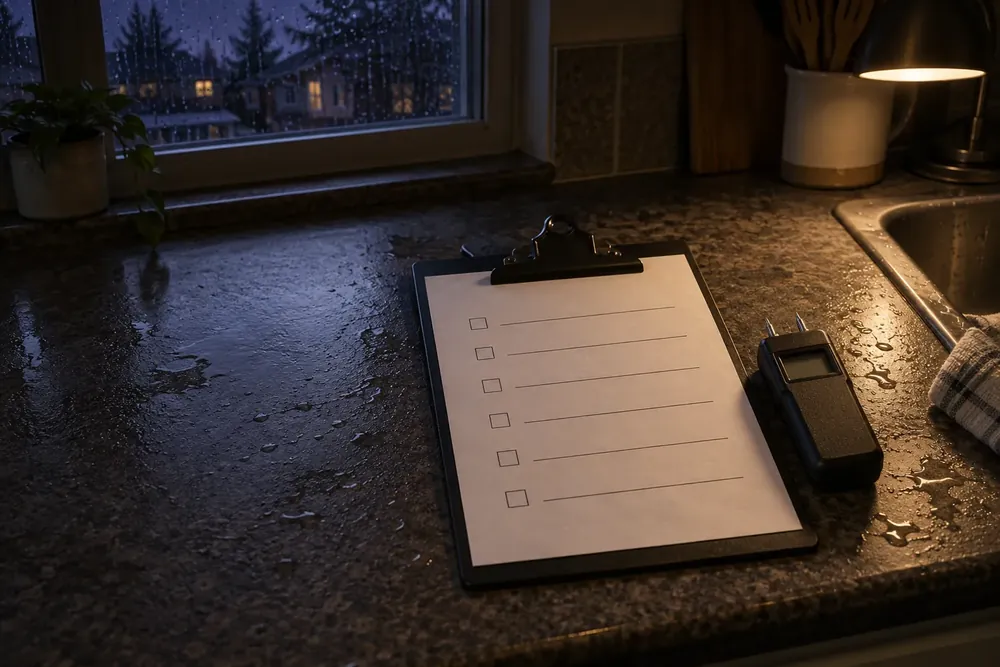
- Written documentation. Photos, moisture readings and the proposed work give you records to keep for insurance documentation.
Stay out of water near electrical equipment
Stay on dry ground when basement water reaches wiring, outlets or appliances. Call from a safe room and describe the hazard. CDC flood guidance says to switch off main power only from a dry location; if reaching the panel means entering water, an electrician must handle it. Don't operate electrical tools while standing in water.
Shut off a leaking water supply only when the valve is safely reachable. Washington Department of Health guidance says to leave immediately if you smell gas and avoid electrical switches. Keep children and pets away from the wet space. Read first steps after water damage for precautions around wet rooms and safe ways to describe the damage.
Related water removal services
Areas we cover around Kent
Our local water damage professionals handle basement and crawl space water in Kent and Sumner. Call with the street address and describe the lowest wet area.
Basement and Crawl Space Questions Callers Ask
Who do I call for water removal from basement near me?
Call about the basement water so extraction and drying get assessed together. Give your Kent address and describe whether water is entering, sitting still or returning after pumping. Your technician checks accessible materials and moisture below the surface. A dry-looking concrete floor doesn't settle whether nearby framing or finished walls remain wet.
Is basement flood clean up near me just pumping out water?
Basement flood cleanup also includes checking affected materials and planning drying after the standing water is removed. Tell the person who answers whether the space contains carpet, stored belongings or finished walls. Water from outside or a backed-up drain changes the cleanup approach. Stay clear of water that may contain sewage.
What does basement water removal near me include for a crawl space?
Crawl space work includes assessing pooled water, wet insulation and moisture in the framing beneath your rooms. Call even if the only signs are an odor or damp flooring upstairs. You don't need to enter the crawl space to describe the problem. Your technician checks accessible areas and explains the extraction and drying scope.
Do I need a water removal pump for basement flooding?
The water depth and safe access determine whether pumping or another extraction method fits the job. Call and describe the water without stepping into it. CDC guidance warns against using electrical equipment while standing in water. A pump removes collected water, but moisture in walls, insulation and wood still needs assessment afterward.
Why does water come back after the basement is emptied?
Water returns when the source continues, such as groundwater entry, a drainage problem or a sump failure. Tell your technician where the water first appears and whether the pump is running. Extraction clears the immediate collection. Preventing another wet floor requires addressing the entry point or failed system as a separate part of the plan.
Call and say where water is collecting below your home, whether the sump is running and which downstairs materials feel wet.
Call now(253) 330-8040